
Home / Blog / Dermatology
DermatologyWinter Eczema on Hands: Dryness, Cracking, and When to See a Clinician
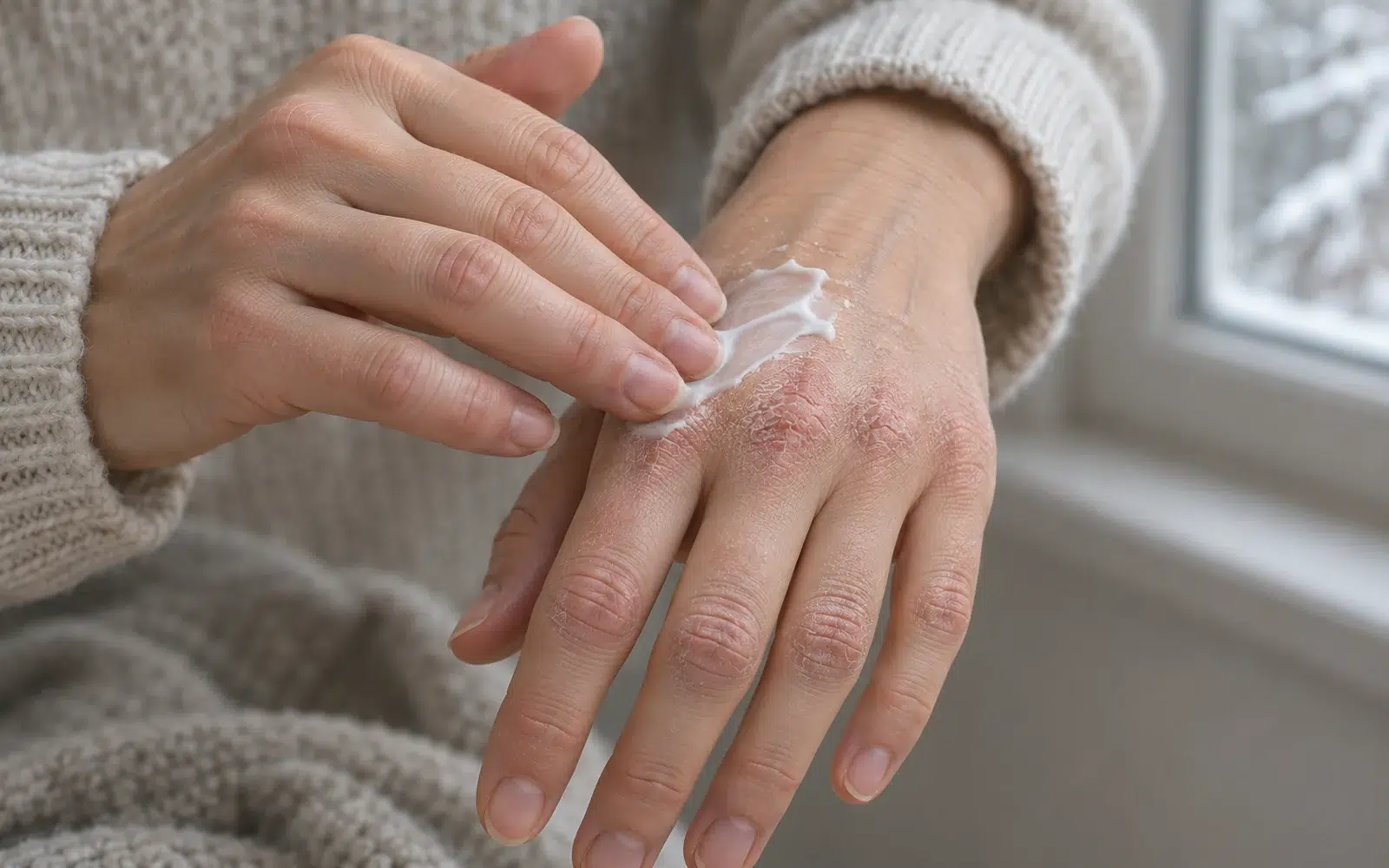
Cold weather can leave your hands feeling tight, itchy, and rough. For some adults, the problem goes beyond ordinary winter dryness: the skin becomes inflamed, painful, or cracked enough to interfere with handwashing and everyday activities. Winter eczema on hands is one possible explanation, but dry hands do not always mean eczema.
Mild dryness
Rough or tight skin, no signs of infection? Gentle washing, frequent fragrance-free moisturizer and gloves for wet work may help.
Skin-care steps to try →Get it assessed
- Still itchy, inflamed or cracked despite moisturizing
- Painful cracks, blisters or recurring rashes
- Interfering with sleep or daily activities
Signs of infection
Increasing pain, warmth or swelling, pus, spreading redness, or a fast-worsening rash with fever needs prompt attention.
See infection warning signs →Understanding your symptoms, daily exposures, and response to gentle skin care can help you decide whether to manage dryness at home, visit primary care, or arrange a dermatology appointment.
Why Hand Symptoms May Worsen in Winter
Cold weather, dry indoor air, heating, frequent handwashing, and cleaning products can strip moisture from the skin and weaken its protective barrier, making hands more prone to dryness, irritation, and cracking.
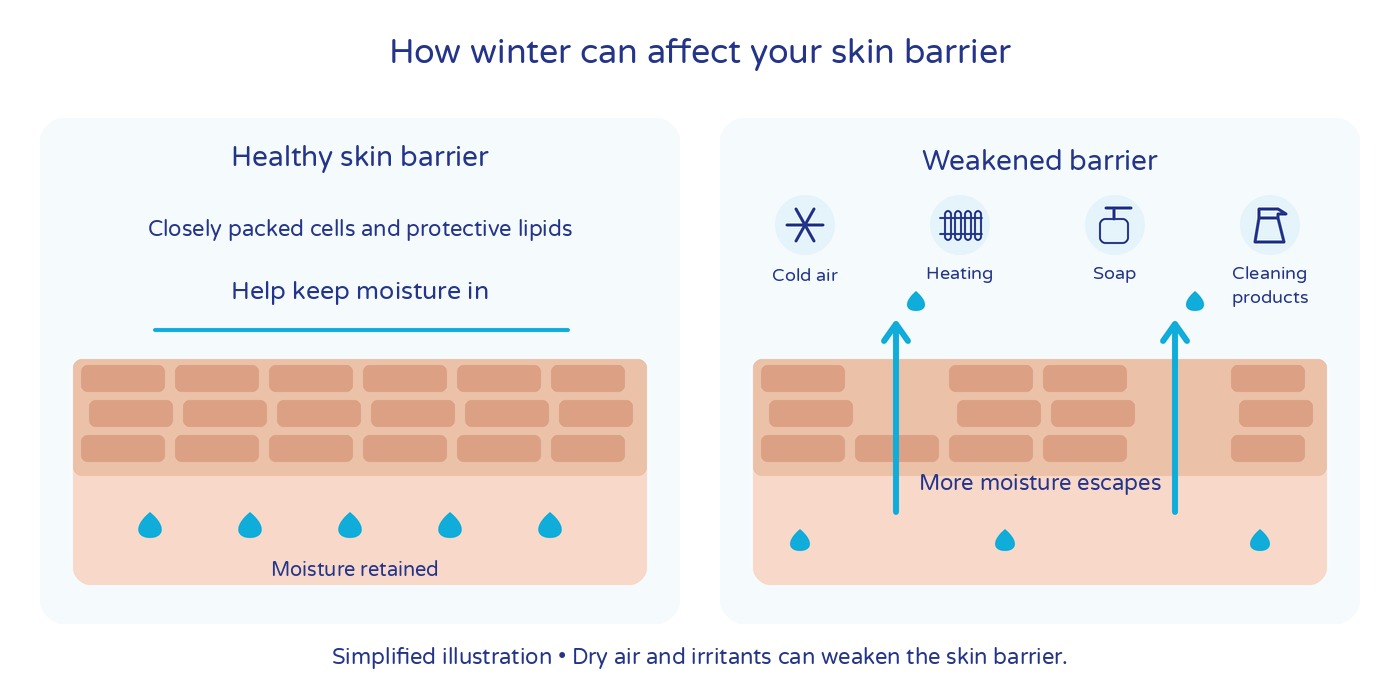 Winter weather and frequent washing can weaken the skin’s protective barrier.
Hands are especially vulnerable because of regular exposure to soaps, sanitizers, detergents, and cleaning chemicals. These irritants can contribute to hand dermatitis, even in people without a history of eczema. Winter weather can worsen existing symptoms, but it is not the only trigger.
Dry Skin, Hand Eczema, and Other Possible Explanations
Rough, tight, improves with moisturizing
Ordinary winter dry skin often causes roughness or tightness that improves with moisturizing.
Persistent itch, burning, scaling, blisters or painful cracks
Hand eczema may cause persistent itching, burning, scaling, blisters, or painful cracks. Inflamed skin may appear red, pink, brown, or purple, depending on skin tone.
Hand eczema can have several causes, including irritation, allergies, or an underlying eczema condition. Common types and other conditions that may resemble hand eczema include:
A healthcare provider may assess your symptoms, possible triggers, and medical history. For persistent or recurring rashes, a dermatologist may recommend patch testing to identify contact allergies.
Hands still dry, itchy or cracked?
PHC offers walk-in primary care and lists dermatology among its specialty services. Call to ask about the right appointment for you.
Practical Skin-Care Steps to Try and Discuss With a Clinician
For mild dryness without signs of infection, these simple habits can help protect your skin:
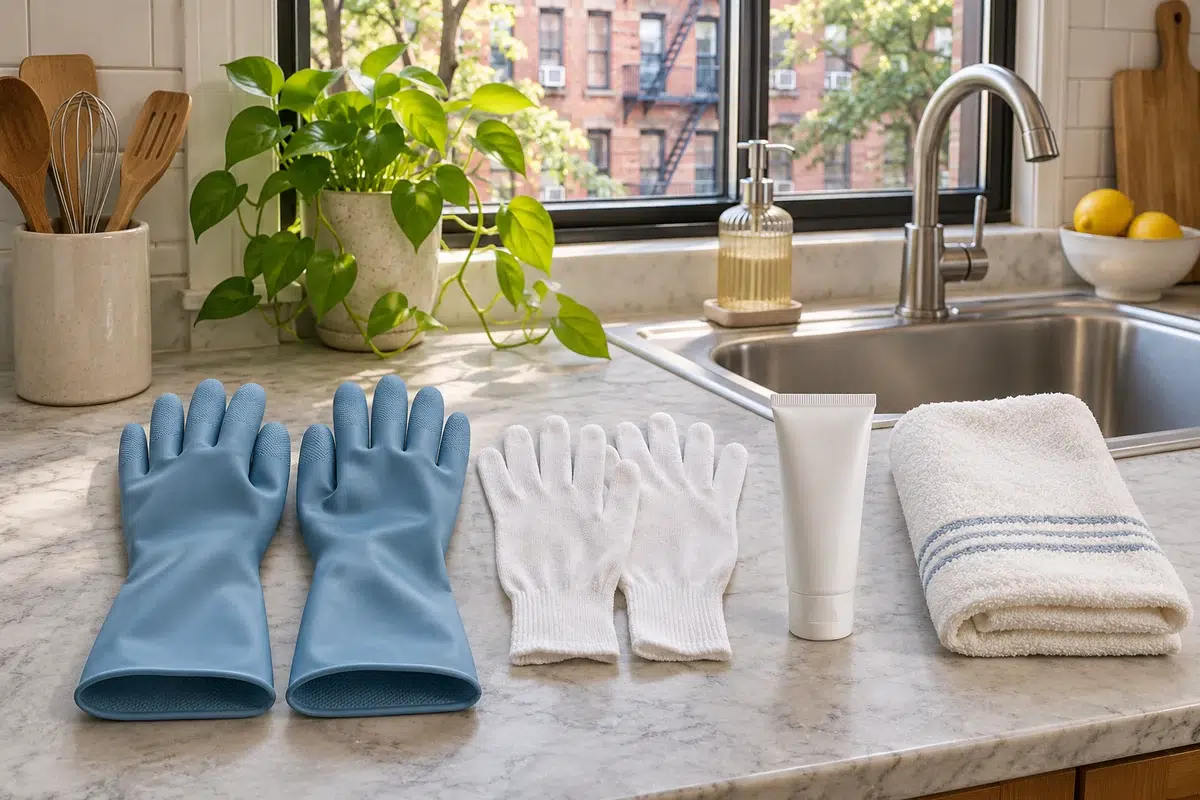
Avoid harsh home remedies on cracked skin. If symptoms persist or worsen, a healthcare provider may recommend prescription treatments, such as anti-inflammatory creams. Use prescription steroid creams only as directed by your clinician.
When to Start With Primary Care or Book Dermatology
Arrange a Clinical Assessment
Contact a healthcare provider if your hands remain itchy, inflamed, or cracked despite moisturizing, or if symptoms interfere with sleep or daily activities. Painful cracks, blisters, or recurring rashes also warrant evaluation.
Primary Care
Primary care can assess symptoms, identify possible triggers, and recommend treatment.
Ask about walk-in careDermatology
Dermatology may be appropriate for persistent, severe, or unclear conditions, especially when allergies or other skin disorders are suspected.
Ask about dermatology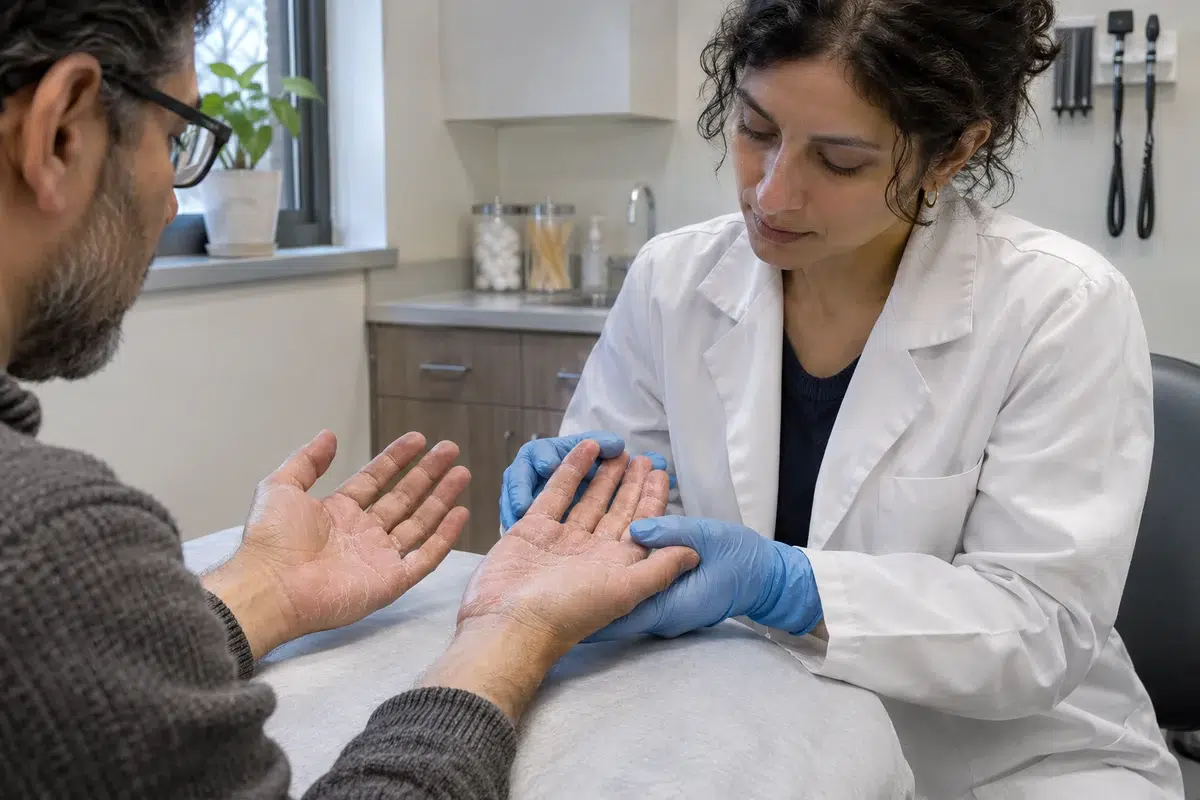
Know the Warning Signs of Possible Infection
Emergency: 911Seek prompt medical attention if your skin:
- Becomes increasingly painful, warm, or swollen
- Develops pus
- Shows spreading redness or discoloration
- Has a rapidly worsening rash, especially with fever, chills, or feeling generally unwell
Seek emergency care if symptoms spread rapidly with serious deterioration or signs of severe illness.
Cracked skin can increase infection risk, but not every painful crack is infected. A clinician can determine whether specific treatment is needed.
A Simple Hand-Care Checklist Before Your Visit
Keep a brief record for a few days so your clinician can understand the pattern:
Hand Symptom Record
Photos taken when symptoms are most noticeable may also help if the appearance changes before your appointment.
Winter Hand Symptoms? Contact PHC Medical Center in Brooklyn
PHC Medical Center provides walk-in primary care and lists dermatology among its specialty services in Borough Park, Brooklyn, serving nearby Kensington, Flatbush, and surrounding communities. Struggling with persistent dry, itchy, or cracked hands? Contact PHC Medical Center at (718) 854-0001 to ask about a walk-in primary care assessment or scheduling a dermatology appointment.
Confirm current clinic hours, dermatology availability, and appointment arrangements before visiting. If you have signs of a serious infection or another emergency, seek urgent or emergency care rather than waiting for a routine visit.
Primary care and dermatology under one roof
One record, one clinic at 4426 18th Avenue. Most insurance plans and Medicaid accepted.
Skin Care, Close to Home
Start with primary care and, if you need it, see a dermatologist in the same clinic, sharing one record and one standard of care.
Dermatology
Medical skin care for rashes, acne, moles, and skin checks.
Learn more →Primary Care
Checkups, screenings and ongoing care for adults.
Learn more →Urgent Care
Walk in for illness and minor injuries, no appointment needed.
Learn more →Family Medicine
One doctor for the whole family, at every age and stage.
Learn more →Struggling With Dry, Itchy or Cracked Hands?
Contact PHC Medical Center at (718) 854-0001 to ask about a walk-in primary care assessment or scheduling a dermatology appointment.
Frequently Asked Questions
Quick answers about winter eczema, handwashing and cracked skin.
Does eczema always get worse in winter?
No. Cold air and low humidity can aggravate eczema for some people, but triggers vary. Others may flare at different times of year or after contact with particular products.
Can frequent handwashing aggravate symptoms?
Yes. Frequent exposure to water and soap can worsen dryness or irritant hand dermatitis. Continue necessary hand hygiene, use gentle products when possible, and apply a fragrance-free cream or ointment after washing.
When does cracked skin need medical attention?
Arrange an assessment if cracks are deep, painful, recurrent, or not improving with careful skin care. Seek prompt medical advice for spreading inflammation, pus, increasing warmth or pain, or fever.