
Home / Blog / Family Medicine
Family MedicineDehydration After Vomiting: Signs to Watch for and When to Get Help
Vomiting can leave you feeling weak and unable to drink much. One concern is dehydration after vomiting: losing more fluid than your body can replace. Not everyone who vomits becomes dehydrated, but repeated episodes, poor fluid intake, or diarrhea can increase the risk.

Mild fluid loss
Alert, no warning signs and keeping liquids down? Offer small, frequent sips and increase fluids gradually.
What helps at home →Contact a provider
- Can’t keep enough fluid down
- Less urine, very dry mouth, dizziness or weakness
- A baby vomiting repeatedly or with fewer wet diapers
Emergency signs
Confusion, fainting, a seizure, severe abdominal pain, or vomit with blood or that is green need care right away.
See all emergency signs →The next step depends on whether you can keep small amounts of fluid down, how often you are urinating, and whether you have warning signs. Babies, young children, older adults, and people with certain medical conditions may need medical advice earlier.
How Vomiting Can Lead to Fluid Loss
Vomiting removes water and electrolytes, including salts that help the body function. Nausea can also make it difficult to replace those losses. If diarrhea or fever occurs at the same time, fluid loss may increase. This is why both the number of vomiting episodes and the amount someone can actually drink matter.
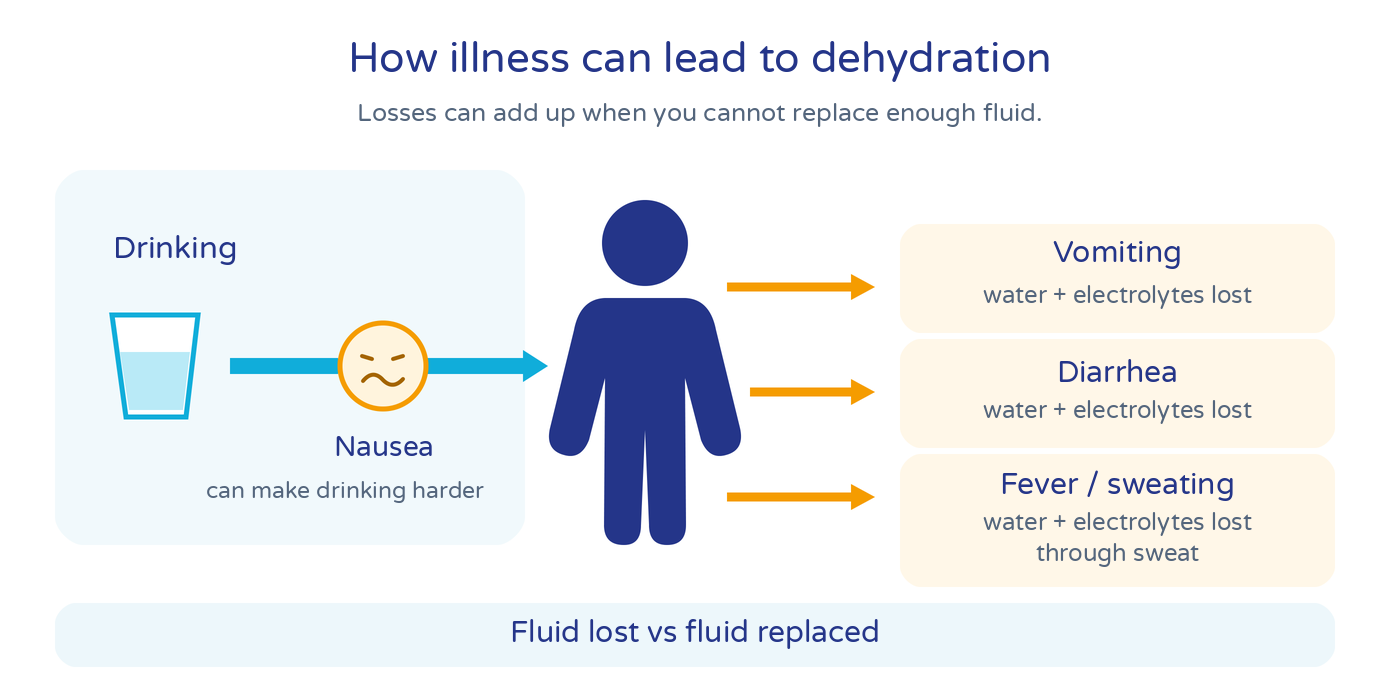 Both how often someone vomits and how much they can actually drink matter.
Dehydration can range from mild to severe. Mild symptoms may improve with careful oral rehydration, but severe dehydration can affect circulation and kidney function and requires urgent treatment. Vomiting itself can have many causes, including stomach infections, medication effects, and other illnesses; do not assume every episode is a routine stomach bug.
Signs to Watch for in Adults and Children
Possible Dehydration Signs in Adults
- More thirst than usual, a dry or sticky mouth, or dark yellow urine
- Urinating less often than normal
- Dizziness or lightheadedness, especially when standing
- Headache, unusual fatigue, weakness, or feeling faint
Possible Dehydration Signs in Infants and Children
- Fewer wet diapers or trips to the bathroom than usual
- Dry mouth, fewer tears when crying, or sunken eyes
- Unusual fussiness, sleepiness, or reduced activity
- In babies, a sunken soft spot on the head
These signs warrant attention, especially when several occur together. Urine color is only one clue; medicines and foods can also affect it. People who are pregnant, older, or living with diabetes, kidney disease, or another significant condition should contact a clinician earlier if vomiting persists.
Babies and young children can become dehydrated quickly. Contact a healthcare provider promptly if an infant has no wet diaper for three hours or more, is feeding poorly, or shows other signs of dehydration. Unusual sleepiness or reduced responsiveness also requires urgent assessment.
Infant with no wet diaper for 3 hours or more, feeding poorly, or showing other signs of dehydration? Contact a healthcare provider promptly.
Worried someone is getting dehydrated?
Call PHC in Boro Park to ask about an appropriate assessment, current hours and visit arrangements.
What Can Help With Mild Fluid Loss at Home?
If the person is alert, has no emergency warning signs, and can keep liquids down, offer small, frequent sips. Gradually increase fluids as tolerated. Oral rehydration solution (ORS) helps replace water and electrolytes lost through vomiting or diarrhea.
Rehydrating Adults
For adults, water or broth may be enough for mild fluid loss, while ORS can help with greater losses. Avoid alcohol and contact a healthcare provider if vomiting continues or fluids cannot be kept down.
Rehydrating Children
For children, a pediatric ORS is often preferred. Offer small amounts using a spoon, cup, or oral syringe. Continue breastfeeding or formula for infants, and consult a pediatrician about ORS use in young babies. Avoid plain water as a replacement for infant feeds or giving anti-vomiting medicines without medical advice.
 Small amounts, offered often, are easier to keep down.
Once vomiting improves, gradually reintroduce regular foods as tolerated. Focus on hydration first rather than forcing solid food.
When to Contact a Clinician or Seek Emergency Care
Contact a healthcare provider promptly if:
(718) 854-0001- Vomiting continues and you or your child cannot keep enough fluid down
- Urination decreases, the mouth is very dry, or dizziness or weakness develops
- A baby is vomiting repeatedly, feeding poorly, or has fewer wet diapers
- Vomiting occurs with fever, ongoing diarrhea, worsening abdominal discomfort, or a significant medical condition
A clinician can assess hydration, look for the cause of vomiting, and advise whether oral rehydration is sufficient.
Seek emergency care immediately if:
Call 911- The person is confused, difficult to wake, faints, or has a seizure
- There is severe or worsening abdominal pain, trouble breathing, or signs of shock such as extreme weakness with cold, clammy skin
- Vomit contains blood, resembles coffee grounds, or is green or yellow-green, particularly in a child
- The person appears severely dehydrated or is unable to drink at all and is deteriorating
Call 911 for life-threatening symptoms. Emergency care should not be delayed while arranging a routine PHC visit.
What to Record Before You Call or Visit
A simple caregiver observation checklist helps a healthcare professional understand what is happening. Try to note:
Caregiver Observation Checklist
This is a communication checklist, not a self-diagnosis score. Report changes in alertness, breathing, or urine output right away.
Dehydration Concerns? Contact PHC Medical Center in Brooklyn

PHC Medical Center provides family medicine and primary care in Borough Park, Brooklyn, serving patients from nearby Kensington, Flatbush, and surrounding communities. For non-emergency vomiting or possible dehydration, call (718) 854-0001 to ask about an appropriate assessment, current hours, and visit arrangements.
The team can help you determine the next step. If severe dehydration or another emergency warning sign is present, seek emergency care instead. Confirm available services before visiting.
One clinic for the whole family
Family medicine, pediatrics and specialists at 4426 18th Avenue. Most insurance plans and Medicaid accepted.
Care for Your Whole Family
From sick visits and pediatric care to digestive health specialists, your PHC team keeps everything in one record under one roof.
Family Medicine
One doctor for the whole family, at every age and stage.
Learn more →Pediatrics
Newborn care, well-child visits, vaccinations and sick visits.
Learn more →Gastroenterology
Digestive health, GI conditions and screening guidance.
Learn more →Urgent Care
Walk in for illness and minor injuries, no appointment needed.
Learn more →Non-Emergency Vomiting or Possible Dehydration?
Call PHC Medical Center at (718) 854-0001 to ask about an appropriate assessment, current hours, and visit arrangements.
Frequently Asked Questions
Quick answers about vomiting, dehydration and keeping fluids down.
Can vomiting cause dehydration?
Yes. Vomiting removes fluid and electrolytes, and nausea may prevent you from replacing them. Repeated vomiting or vomiting with diarrhea raises the risk, especially in children and older adults.
Can dehydration itself cause nausea or vomiting?
Yes. Dehydration may contribute to nausea and sometimes vomiting, which can make it harder to drink and worsen fluid loss. However, nausea or vomiting can have other causes and should not automatically be attributed to dehydration.
What if someone cannot keep fluids down?
Try small, frequent sips only if the person is alert and has no emergency signs. Contact a clinician promptly if fluids continue to come back up or dehydration signs appear. Seek emergency care for confusion, fainting, severe weakness, or other serious symptoms.