
Home / Blog / Cardiology
Heart HealthWhat Does a High Lipid Panel Mean? Questions for Your Follow-Up Visit
A lipid panel can feel confusing when one or more numbers are marked “high.” The result may highlight an important risk factor, but it does not diagnose heart disease or automatically mean you need medication. What a high lipid panel means depends on which measurements are flagged, your health history, and your overall cardiovascular risk.

Read the full report
One flagged number doesn’t diagnose heart disease or decide whether you need medicine. Look at every value and the reference ranges.
What each number measures →Book a follow-up
- Review results in context of your overall risk
- Ask whether repeat or extra testing helps
- Agree on goals and a review schedule
Don’t wait if…
Chest pain, severe shortness of breath or possible stroke symptoms need emergency care, not a cholesterol follow-up.
When to call 911 →The most useful next step is to review the complete report with a healthcare professional.
What Does a Lipid Panel Measure?
A lipid panel is a blood test that measures cholesterol and other fats related to heart health. Results are typically reported in milligrams per deciliter (mg/dL) and include:
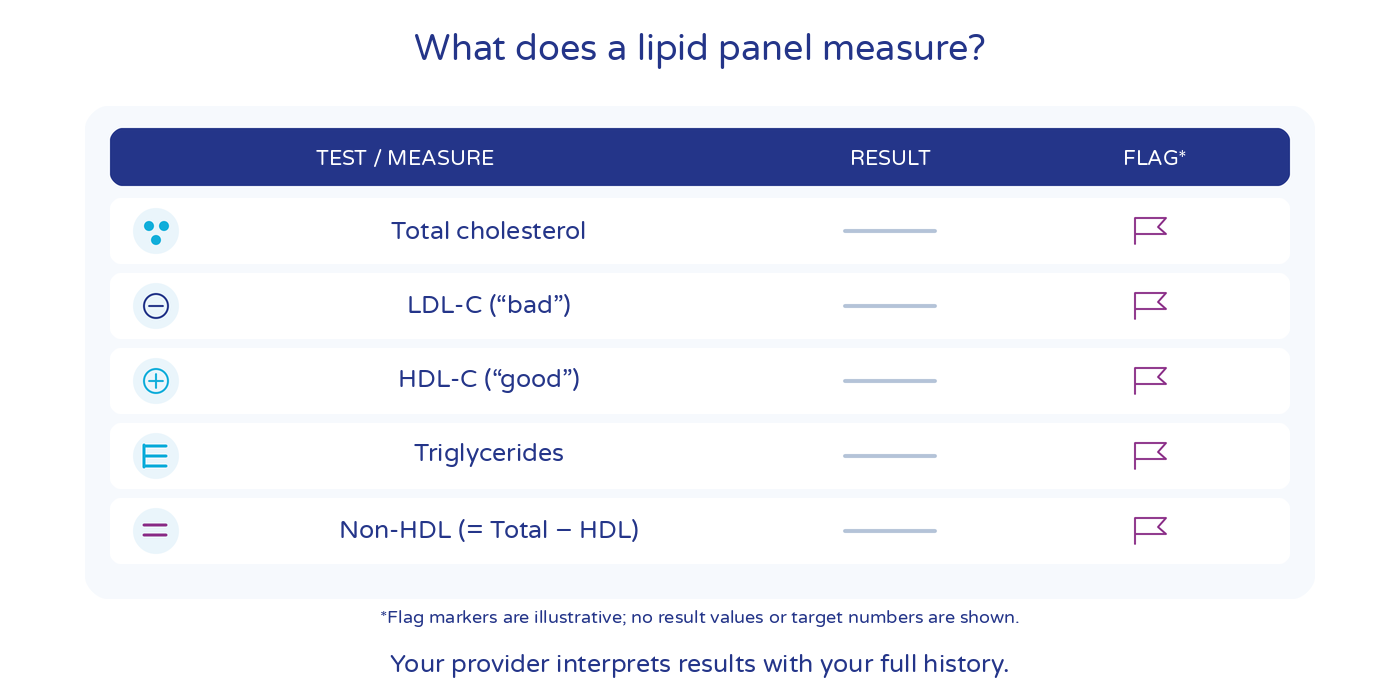 Flags on a report are a starting point. Your provider interprets them with your full history.
Your report may flag certain results as high or low, but these values do not determine your overall cardiovascular risk on their own. Your healthcare provider will interpret the results alongside your medical history and individual risk factors to determine whether further evaluation or treatment is needed.
Why Does a Flagged Result Need Context?
A high lipid result is an important cardiovascular risk factor, but it does not determine your overall risk on its own. Your healthcare provider will consider your age, blood pressure, diabetes, kidney disease, smoking status, family history, and previous cholesterol results.
The 2026 ACC/AHA dyslipidemia guideline emphasizes personalized cardiovascular risk assessment. For adults aged 30–79 without known cardiovascular disease, clinicians may use the AHA PREVENT risk equations alongside other risk factors to guide treatment decisions. Patients with established cardiovascular disease may require lower cholesterol targets.
Your clinician may consider whether you fasted before testing. Nonfasting tests are suitable for many patients, but significantly elevated triglycerides may require repeat fasting testing. The 2026 guideline also recommends measuring lipoprotein(a) at least once in a lifetime, while apolipoprotein B testing may help clarify risk in selected patients.
Important
Call PHCVery high triglycerides can increase the risk of pancreatitis, while extremely high LDL cholesterol may suggest an inherited condition. Contact your healthcare provider if your results require prompt follow-up.
Results flagged? Talk them through with PHC.
Ask about an internal medicine assessment or cardiology appointment at our Boro Park clinic.
What Should You Ask at Your Follow-Up Visit?
Bring a copy or screenshot of the full laboratory report, not only the flagged number. These questions can help you understand what comes next:

If you are already taking cholesterol medicine, do not stop or change the dose on your own because of one result. Bring your medication list, including supplements, and describe any problems taking prescribed treatment.
What Might Ongoing Monitoring Involve?
Follow-up care may include lifestyle recommendations, reviewing existing health conditions, monitoring medications, and repeating lipid tests. Your healthcare provider may adjust treatment based on your results and individual cholesterol goals.
Testing frequency varies by patient. Those starting or changing medication may need earlier follow-up, while patients with stable results may require less frequent testing. Your clinician will recommend an appropriate schedule.

A Simple Checklist to Bring to Your Appointment
Appointment Checklist
Discuss Your Lipid Panel With PHC Medical Center in Brooklyn
PHC Medical Center provides walk-in primary care and lists internal medicine and cardiology among its services in Borough Park, Brooklyn, serving patients in nearby Kensington, Flatbush, and surrounding communities. If your cholesterol test results were flagged, contact PHC at (718) 854-0001 to ask about an internal medicine assessment or cardiology appointment and confirm current visit arrangements.
Bring your lipid panel, previous results, and medication list.
Emergency symptoms can’t wait
Call 911If you develop chest pain, severe shortness of breath, or symptoms of a possible stroke, seek emergency care rather than waiting for a cholesterol follow-up.
Primary care, internal medicine and cardiology under one roof
One record, one clinic at 4426 18th Avenue. Most insurance plans and Medicaid accepted.
Heart Health, One Record
Your primary care provider, internal medicine and cardiology teams work from one record, so your results and plan stay connected.
Internal Medicine
Adult care focused on prevention and chronic conditions.
Learn more →Cardiology
Heart health, from screening to ongoing cardiac care.
Learn more →Primary Care
Checkups, screenings and ongoing care for adults.
Learn more →Family Medicine
One doctor for the whole family, at every age and stage.
Learn more →Cholesterol Results Flagged? Let’s Review Them.
Contact PHC at (718) 854-0001 to ask about an internal medicine assessment or cardiology appointment and confirm current visit arrangements.

Frequently Asked Questions
Quick answers about flagged cholesterol results.
Does One Flagged Number Decide Whether I Need Medicine?
No. A clinician considers the entire lipid panel, cardiovascular risk, health conditions, and medical history. Some people benefit primarily from lifestyle changes, while others may also need medicine. The decision and treatment goals should be individualized.
Can I Tell Whether I Have High Cholesterol From Symptoms?
Usually not. High cholesterol typically has no noticeable symptoms. A blood test is needed to identify elevated levels, and your healthcare professional can explain what the findings mean for you.
Should I Bring Previous Cholesterol Results?
Yes. Earlier results can show whether values are stable, rising, or responding to treatment. They may help your clinician decide whether further testing or a change in care is needed.