
Home / Blog / Walk-In & Urgent Care
Walk-In & Urgent CareWhen Should You Get Tested for Strep Throat?
A sore throat can make swallowing uncomfortable, but it does not always mean you have strep throat. Most sore throats are caused by viruses, while strep throat is a bacterial infection that may need antibiotics. Knowing when to get tested for strep throat can help you seek appropriate care without taking antibiotics unnecessarily.

Looks like a virus
Cough, runny nose, hoarseness, red eyes or mouth ulcers point toward a virus. Strep testing is usually unnecessary.
Supportive care for a sore throat →Ask about a strep test
- Sudden throat pain, especially when swallowing
- Fever or swollen, tender neck glands
- Close contact with someone who has strep
Emergency signs
Trouble breathing, can’t swallow saliva, drooling, or rapidly worsening throat swelling need care right away.
See all warning signs →The decision depends on your symptoms, age, possible exposure, and a clinician’s assessment. A throat exam alone cannot reliably confirm strep when clear signs of a viral infection are absent.
Which Sore-Throat Symptoms Should You Discuss With a Clinician?
Strep throat is caused by group A Streptococcus bacteria and is most common in children ages 5–15. Contact a healthcare provider if you or your child experiences:
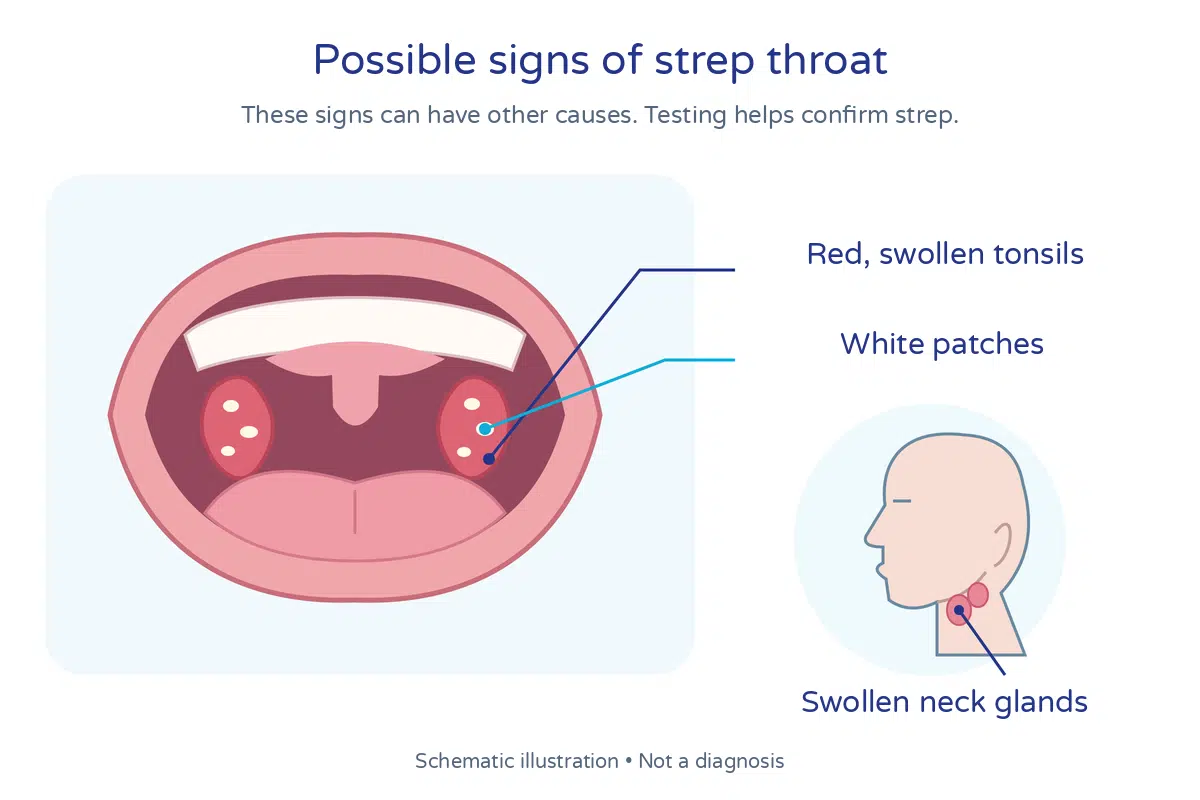 These signs may suggest strep throat, but only a test can confirm it.
These symptoms may suggest strep throat but do not confirm it. Children may also experience headaches, stomach pain, nausea, or vomiting.
Strep throat is uncommon in children under 3, so routine testing is generally unnecessary unless specific risk factors, such as household exposure, are present.
Discuss testing with a clinician
- Sudden, painful swallowing
- Fever, swollen neck glands
- Red, swollen tonsils, sometimes white patches
- Sandpaper-like rash
- Recent strep exposure
Symptoms That Point More Toward a Virus
Cough, runny nose, hoarseness, red eyes, and mouth ulcers suggest a viral illness rather than classic strep throat. When these viral symptoms are clear, strep testing is usually unnecessary. Explain all your symptoms to the clinician rather than relying on the appearance of your tonsils.
Warning Signs That Should Not Wait for Routine Testing
Call 911Seek emergency care for:
- Trouble breathing
- Inability to swallow saliva
- Drooling with difficulty swallowing
- Rapidly worsening throat swelling
Severe one-sided throat pain with a muffled voice or difficulty opening the mouth also needs urgent assessment. Call 911 for life-threatening symptoms.
Contact a healthcare provider promptly for signs of dehydration, a concerning rash, worsening symptoms, or a fever of 100.4°F (38°C) or higher in an infant younger than 3 months.
Sore throat that isn’t getting better?
Call PHC to ask about walk-in availability, current hours and strep-testing options at our Boro Park clinic.
How Does a Clinician Decide Whether Testing Is Appropriate?
A healthcare professional may review your symptoms, recent strep exposure, and medical history before examining your throat. They may use a clinical scoring system to assess the likelihood of strep throat, but this does not confirm the diagnosis.
Because symptoms alone cannot reliably distinguish strep throat from a viral infection when clear viral signs are absent, testing helps confirm the diagnosis before antibiotics are prescribed. Age and other risk factors may also influence testing decisions.
What Can Rapid Tests and Throat Cultures Tell You?
How Do They Test for Strep Throat?
A clinician or trained staff member gently swabs the back of your throat and tonsil area. The swab is then processed with an appropriate test. It can feel briefly uncomfortable, but sampling usually takes only a few seconds.
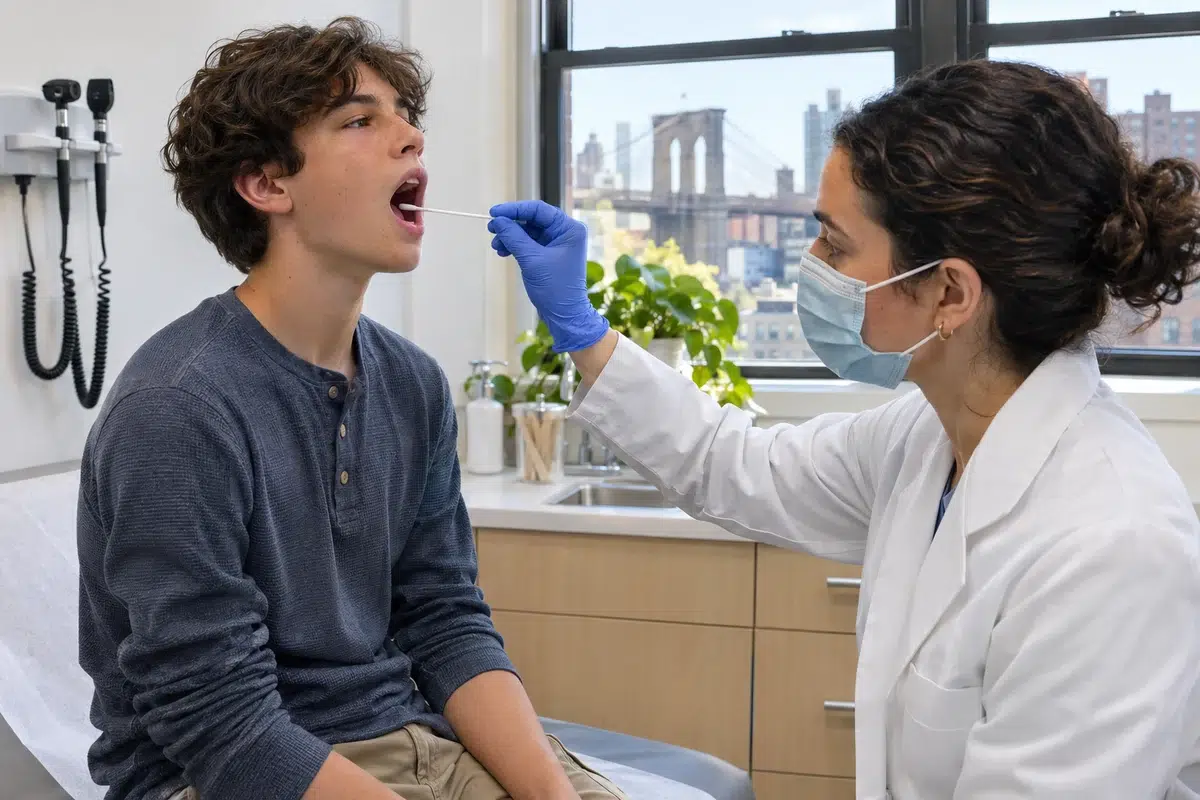 Collecting a throat swab usually takes only a few seconds.
Rapid Antigen Test Versus Throat Culture
Detects group A strep antigens. A positive result generally confirms strep throat.
Checks for bacterial growth and can detect infections missed by rapid tests.
Detects bacterial genetic material. Offered by some facilities.
Some facilities also offer rapid molecular tests, which detect bacterial genetic material. Test availability and result times vary, so ask your clinician which test is being used.
What Does a Negative Rapid Test Mean?
A negative rapid antigen test does not always rule out strep throat. For symptomatic children aged 3 and older, the CDC recommends a backup throat culture to detect infections the rapid test may miss. Adults generally do not need a backup culture because acute rheumatic fever is uncommon in this age group.
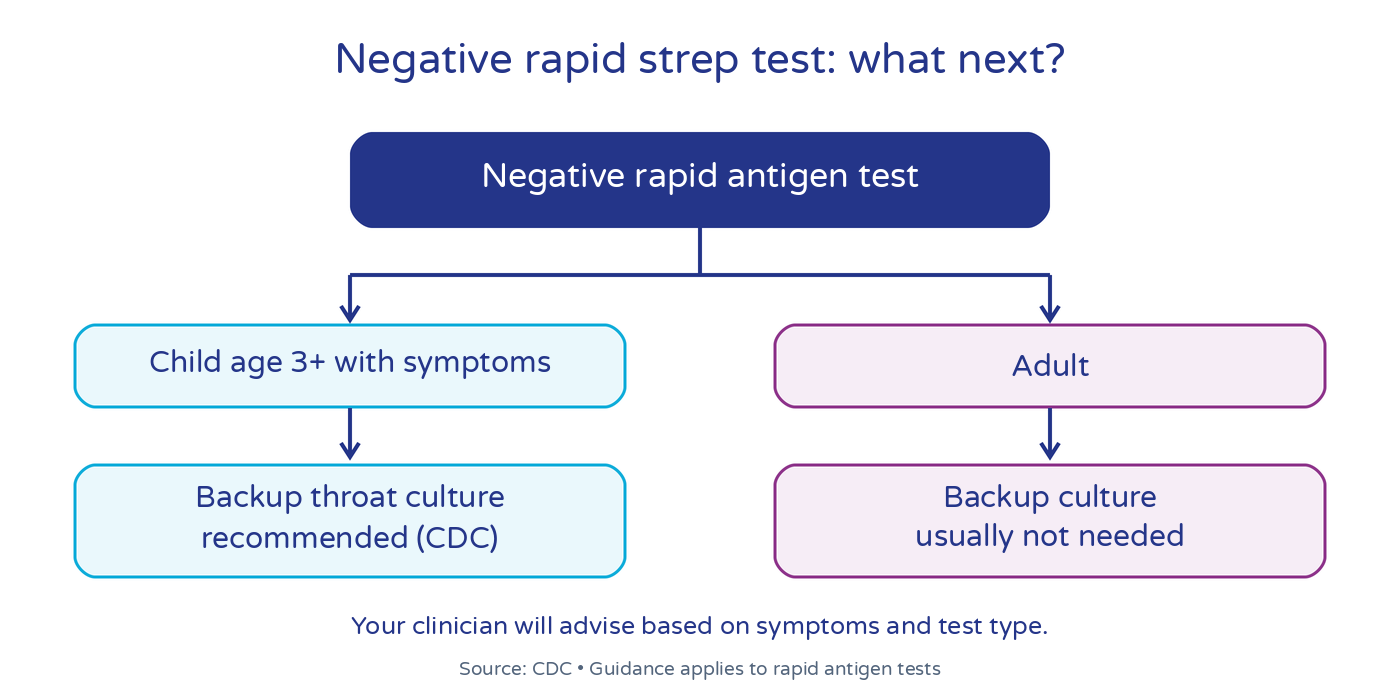
A positive test usually leads to antibiotic treatment, while a negative culture generally means antibiotics for strep are unnecessary. Always follow your healthcare provider’s advice and avoid using leftover antibiotics.
Primary care, pediatrics and walk-in care in one place
Adults and children are seen at 4426 18th Avenue. Most insurance plans and Medicaid accepted.
What Should You Do While Waiting for Advice or Results?
For a mild sore throat without warning signs, supportive care may help while you seek advice or await results:

If You’re Prescribed Antibiotics
If antibiotics are prescribed for confirmed strep throat, take them exactly as directed and complete the prescribed course. People with strep throat should stay home from work, school, or daycare until they no longer have a fever and have taken appropriate antibiotics for at least 12–24 hours; follow your clinician’s specific instructions.
Contact your healthcare provider if symptoms are not improving after 48 hours of antibiotic treatment or if they worsen. Further evaluation may be needed to check for complications or another cause of the symptoms.
Sore Throat Concerns? Contact PHC Medical Center in Brooklyn
PHC Medical Center provides walk-in primary care in Borough Park, Brooklyn, for patients in the surrounding community, including Kensington and Flatbush.
Experiencing a persistent or worsening sore throat? Contact PHC Medical Center at (718) 854-0001 to ask about walk-in primary care availability, current hours, and strep-testing options. The PHC team can help you determine the appropriate next step.
Everyday Care for Every Age
From a same-day sick visit to checkups and well-child care, your PHC team keeps the whole family’s care in one record under one roof.
Urgent Care
Walk in for illness and minor injuries, no appointment needed.
Learn more →Primary Care
Checkups, screenings and ongoing care for adults.
Learn more →Pediatrics
Newborn care, well-child visits, vaccinations and sick visits.
Learn more →Family Medicine
One doctor for the whole family, at every age and stage.
Learn more →Persistent or Worsening Sore Throat?
Contact PHC Medical Center at (718) 854-0001 to ask about walk-in primary care availability, current hours, and strep-testing options.

Frequently Asked Questions
Quick answers about strep tests, results and what a negative test means.
Can you tell whether it is strep just by looking?
No. Redness, swelling, and white patches can occur with more than one illness. When viral symptoms are not obvious, a clinician generally needs an appropriate test to confirm group A strep throat.
How long can strep test results take?
Rapid antigen tests often give results in about 10–20 minutes. Throat cultures commonly take 24–48 hours. Exact timing depends on the test and laboratory process.
What happens if a rapid strep test is negative?
For symptomatic children aged 3 or older, a negative rapid antigen test should generally be followed by a throat culture. Adults usually do not need a backup culture. Your clinician will advise based on symptoms and test type.